
Sex Offender Checks in Cook County
The Georgia Sex Offender Registry is the main public channel for a Cook County sex offender search. GBI operates the statewide database. Searchers can narrow a geographic query to Cook County or use a name when they already know whom they seek. No separate public Cook County registry map was verified, so the state portal is the sound starting point.
The Cook County Sheriff serves as the local registration and update office. The current sheriff site lists 3335 County Farm Road in Adel and 229-896-7471, but an older county directory gives 1000 County Farm Road. Call before visiting. Use extension 1 for sheriff operations. Bring enough detail to distinguish people with similar names, and check the profile date instead of treating a result list as the final word.
Cook Registry Updates Move Daily
Timing matters when an address or status has changed. GBI says county sheriffs must send changes within two business days, and the public Georgia registry is updated daily. That sequence explains why a newly reported move may not appear at once. It also shows why the sheriff and GBI have different roles: Cook County staff take and verify local registration details, while GBI publishes the statewide search.
If a Cook County entry seems stale, note the residence-verification date and contact the sheriff rather than confronting the listed person. The office can receive a factual report and decide whether follow-up is needed. An emergency or conduct in progress belongs with 911.
The GBI registry overview illustrates the state framework used for those updates.
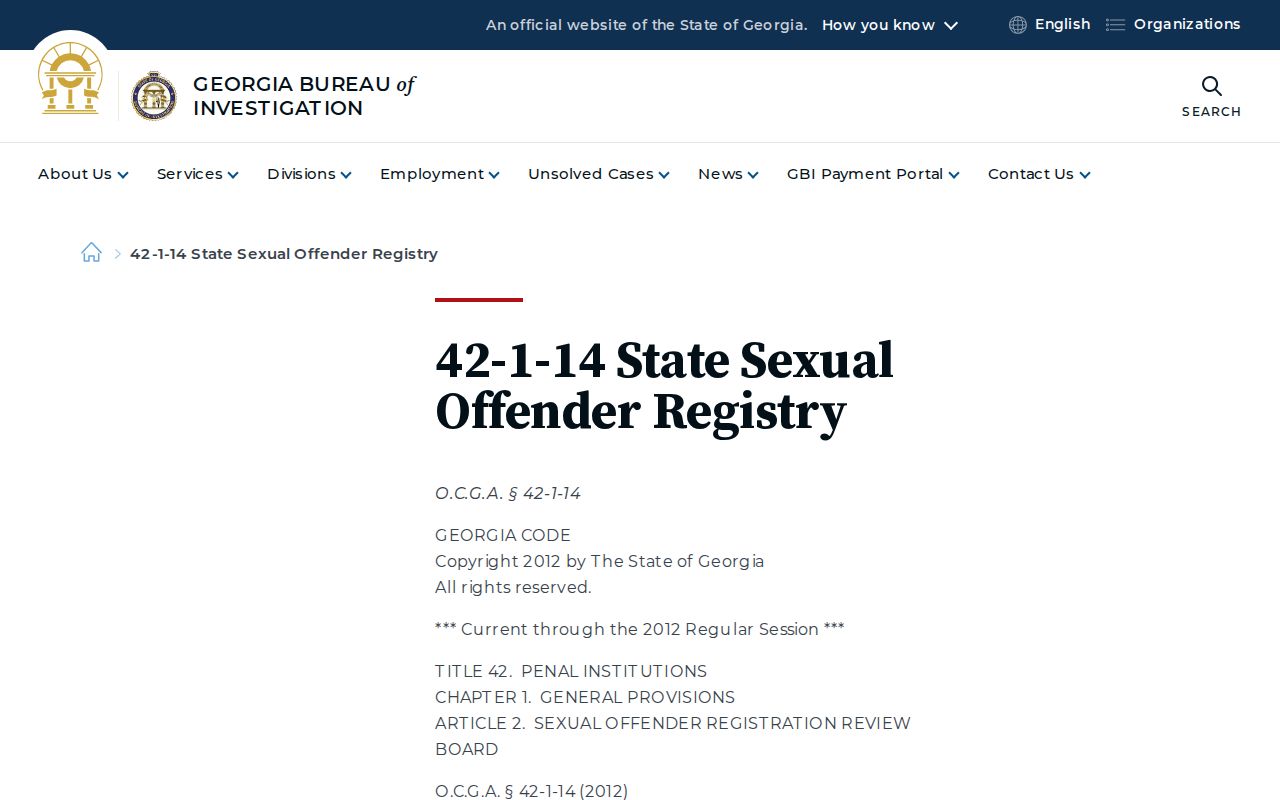
That official source connects local sheriff reporting to the public registry rather than to a separate county list.
How to Search the Georgia Sex Offender Registry
GBI offers both name and geographic controls. A county filter is useful for a broad Cook County search, while an address and radius can focus on one area. Search labels and radius choices may change, so read the live form before submitting. A blank result does not prove that no duty exists. Spelling, an alias, a recent update, or a search boundary can affect what appears.
- Open the official Georgia registry and review its conditions of use.
- Choose a name search or enter geographic details. Select Cook for a county-focused result.
- Compare likely matches by photo, year of birth, aliases, and location. Do not rely on a shared name.
- Open the complete profile and read its offense, status, level, and verification fields together.
| Field Label | Type | Required | Notes |
|---|---|---|---|
| Search mode | Tabs or options | Varies | Choose name or geographic criteria |
| First and last name | Text | Search-dependent | Try spelling variants; profiles may show aliases |
| County | Dropdown | No | Select Cook for county results |
| City, ZIP, or address | Text | No | Use consistent street spelling |
| Radius | Dropdown | Address-dependent | Live distance options can change |
| Offense or category | Options | No | Do not infer risk from the offense label alone |
Registering With the Cook Sheriff
People subject to Georgia registration provide required information before release or placement on supervision, then report updates through the sheriff in the county where they live. Someone moving out of Georgia must notify the former Georgia sheriff and register in the new jurisdiction within the period set by law. Cook County has not published appointment hours or local reporting mechanics for this service, so call 229-896-7471 before going to County Farm Road.
The sheriff's role is not the same as the public search. Staff collect a wider statutory set of data than the inspected public profile displays. The lack of a public vehicle, workplace, email, fingerprint, or identifying-mark field does not mean the office failed to collect it. It means the public page is narrower than the underlying registration record.
The county audit material provides additional context on Cook Sheriff and Jail Operations.

It reinforces that sheriff operations and public registry publication are related but distinct functions.
Inside a Registry Profile
A Cook County registry profile is meant to help the public identify the correct person and understand the listing. The inspected GBI layout showed a current photo and its submission date, name components, physical descriptors, year of birth, aliases, address and county, registration and residence-verification dates, level, predator and absconder indicators, and an offense table. Read the fields as a whole.
| Name and aliases | First, middle, last, suffix, and listed alternate names |
|---|---|
| Photo and description | Photo date, gender, race, birth year, height, weight, hair, and eyes |
| Address | Full primary or last-known address and county |
| Offense | Offense count, conviction date, conviction state, and offense name |
| Classification | Leveling and sexually dangerous predator indicator |
| Status | Absconder indicator, registration date, and residence-verification date |
Read Cook Profiles Without Overreach
A public profile has firm limits. The inspected layout did not show a full birth date, Social Security number, fingerprints, vehicle, employer or school, scars or tattoos, victim age, statute number, sentence, or a federal-style tier duration. Some of those details may be gathered under Georgia law without being displayed to the public.
Use the photo date and residence-verification date to judge freshness. The predator and absconder labels also have specific meanings. Neither an address nor a conviction entry proves that a new offense occurred. For a suspected error, contact the Cook County Sheriff first when the issue concerns a local address or verification. Contact GBI when the problem appears to concern the state display.
The GBI registry FAQ supplies the official statewide context.
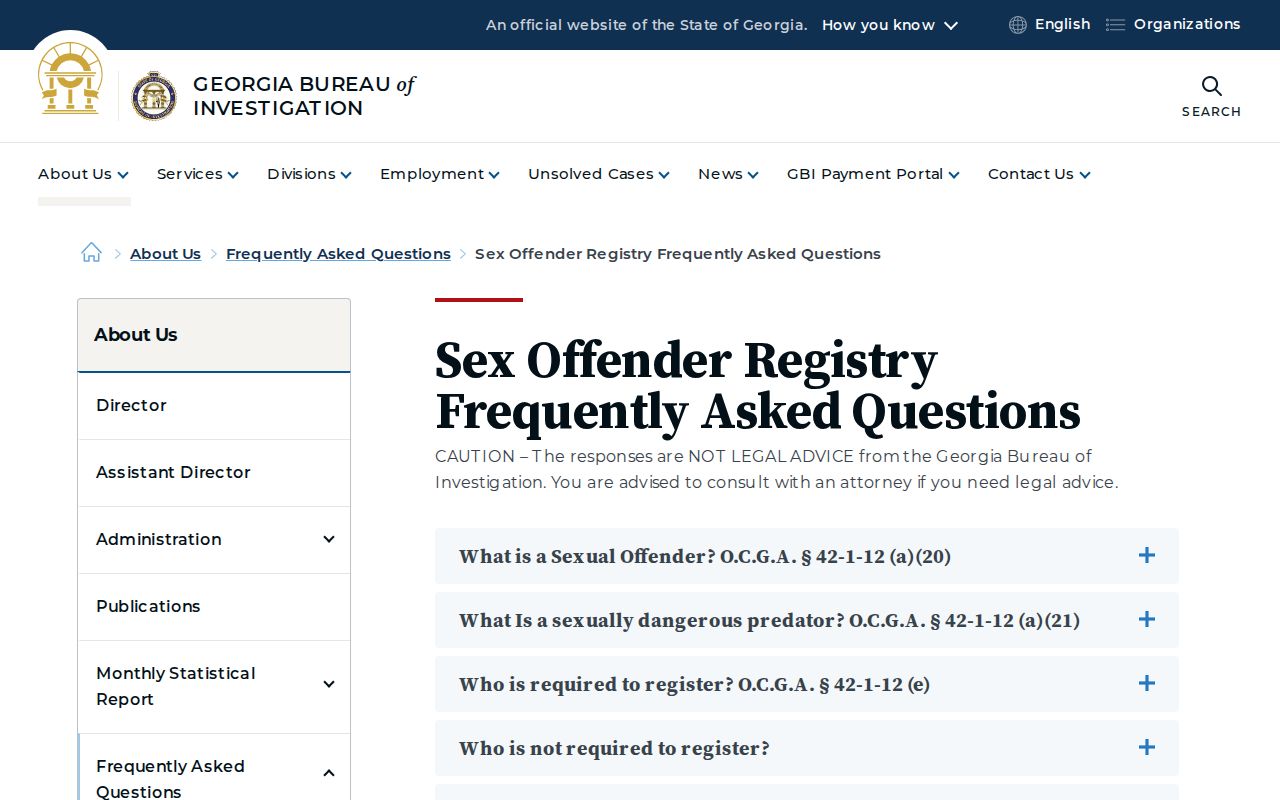
Its cautions help readers separate a public safety listing from unsupported conclusions.
Georgia Registration Levels and Requirements
Georgia uses Level I, Level II, sexually dangerous predator, and not-yet-classified labels. These are risk assessments, not the federal ten-year, 25-year, and lifetime SORNA tier scheme. Under O.C.G.A. § 42-1-12(f)(6), registration is generally for life, excluding time in custody, unless a statute or court order grants relief. O.C.G.A. § 42-1-19 provides limited petition paths. The former statewide annual fee was removed in 2021.
| Georgia label | Registration effect | Public meaning |
|---|---|---|
| Level I | Registration continues unless relief is granted | Lower assessed risk than Level II under Georgia criteria |
| Level II | Registration continues unless relief is granted | Increased assessed risk under Georgia criteria |
| Sexually Dangerous Predator | Added reporting and lifetime GPS provisions | Highest Georgia statutory designation |
| Not yet classified | A public duty may still apply | No completed or required assessment shown |
Cook County Search Versus NSOPW
The Georgia registry is best for the detailed state record and a Cook County filter. The Dru Sjodin National Sex Offender Public Website, or NSOPW, is the better cross-state layer because it federates searches from participating jurisdictions. A person may move, use an alias, or have a record tied to another state, so the two channels answer different questions.
Start with Georgia when the location is known to be Cook County. Use NSOPW when the search crosses state lines or the current jurisdiction is unclear. Then return to the source jurisdiction's full profile for details and dates.
The national portal's official search page shows that broader scope.
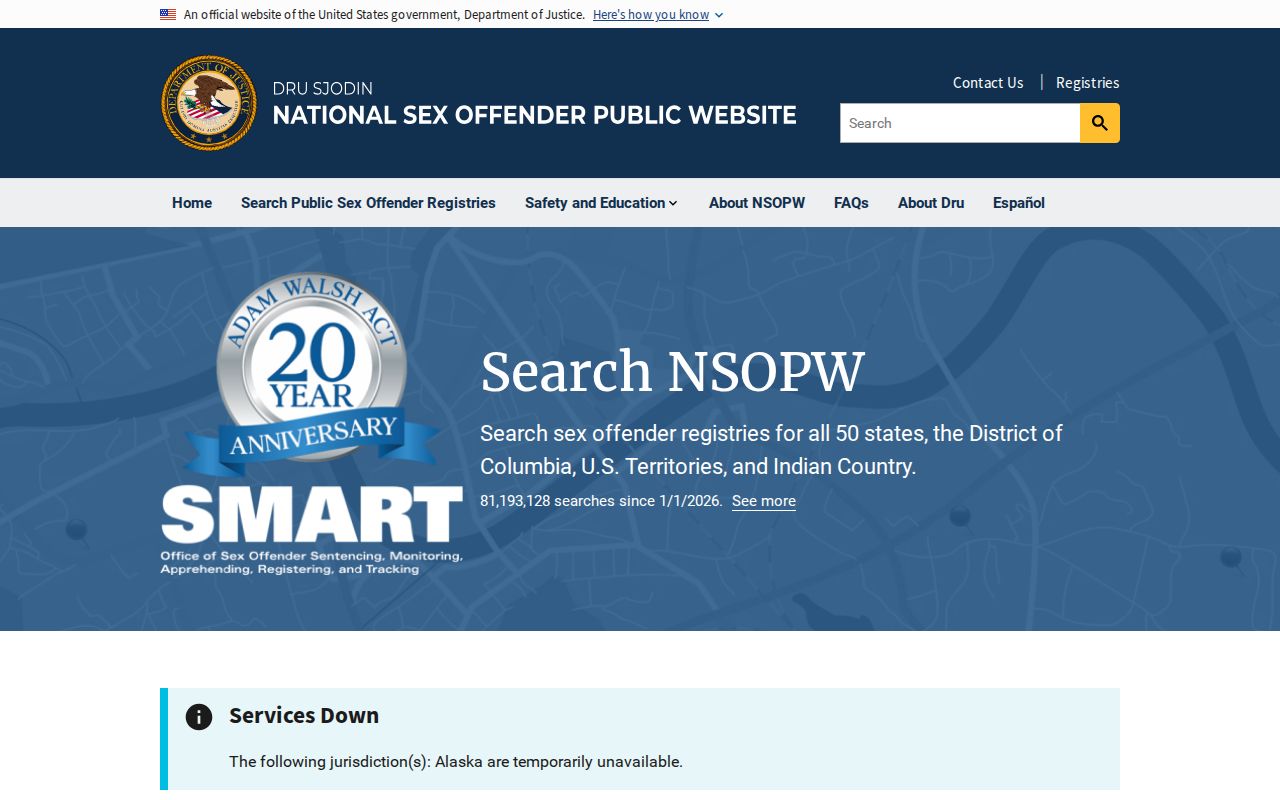
That layer supplements rather than replaces the Cook County filter on Georgia's registry.
Juvenile Cases and Georgia Registration
Georgia's cited registry rule does not register juveniles merely because a juvenile case exists. Registration applies when a young person was tried and convicted as an adult under the governing rule. That distinction matters because juvenile records and adult criminal convictions do not follow the same public-access path.
Do not infer a juvenile history from a blank registry search. The registry answers only whether the statutory public registration system lists a person. It is not a search of juvenile court files, all sex-related allegations, or every criminal case.
The Georgia General Assembly legislation service provides primary legislative context for changes to state duties.
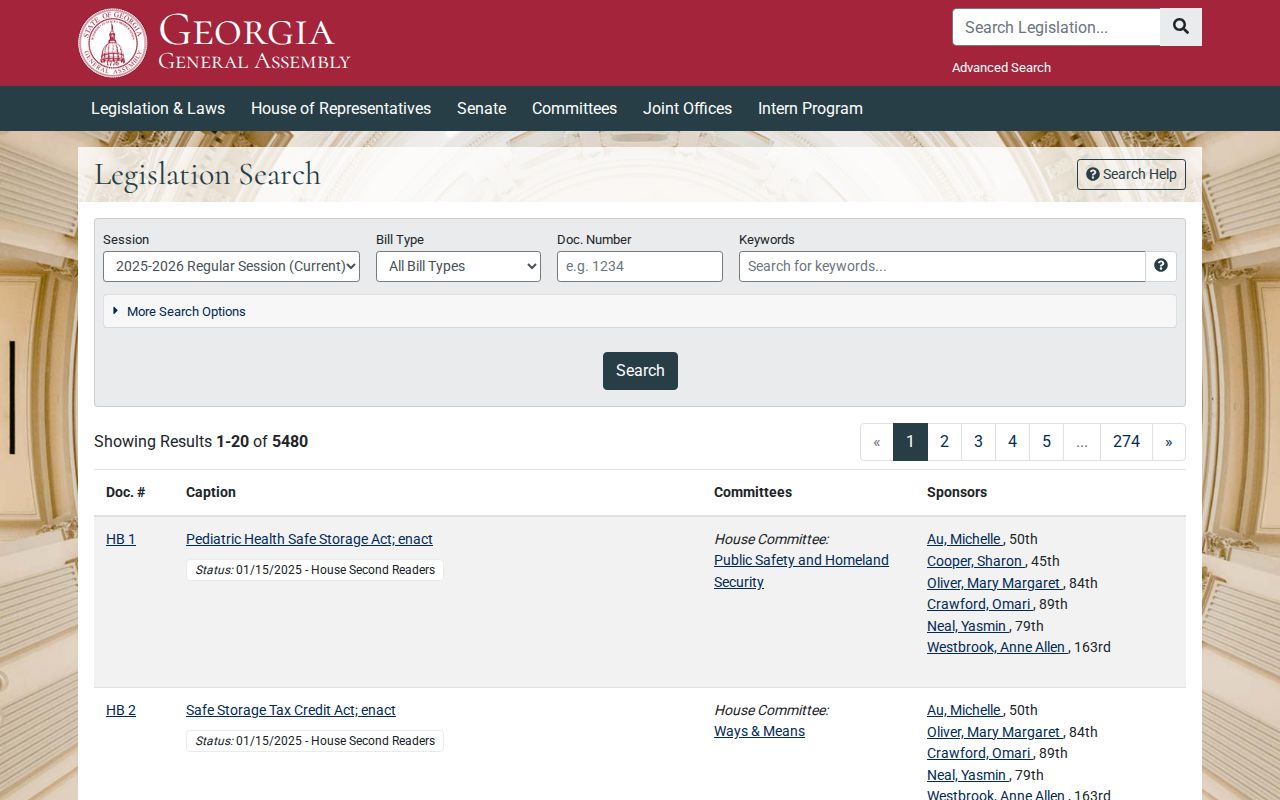
Current law, not a broad assumption about age, controls whether the public registration duty applies.
Community Notification and Lawful Use
Registry information supports personal safety and community awareness. Use it to understand a listing, plan sensible precautions, or give a factual tip to the proper office. It is not permission to visit a listed address, contact a household, publish accusations, or take enforcement into private hands. Report suspected noncompliance to the Cook County Sheriff or GBI. Call 911 for an immediate threat.
O.C.G.A. § 42-1-12 creates Georgia's registration, sheriff-update, and public-notification framework. Public access does not erase other laws against threats, trespass, intimidation, or misuse of personal data. Confirm any disputed status with the agency that maintains it.
The Georgia Attorney General's open-government resource gives the broader public-access context.
Public availability never authorizes intimidation, trespass, or private enforcement.
Misuse can be a crime: Georgia registry data must not be used to harass, threaten, intimidate, trespass, or support vigilante action against a registrant or household. Use it only for lawful safety and awareness purposes.